Choosing the Perfect VPN Provider: Key Factors to Consider
Welcome to the world of online privacy and security, where choosing the right Virtual Private Network (VPN) provider is crucial. In this digital age, protecting our personal information has become more challenging than ever before. Whether you want to safeguard your browsing activities, access geo-restricted content, or stay anonymous online, a reliable VPN can be your knight in shining armor. But with countless providers promising top-notch services, how do you choose the perfect one? Fear not. In this blog post, we will unravel the key factors that should guide your decision-making process when selecting a VPN provider.
Security and Encryption
 At the core of any VPN service lies its security infrastructure. Robust encryption protocols, such as AES-256, are non-negotiable. The VPN provider must employ a ‘no-log’ policy, meaning they do not store user activity data. Look for features like a kill switch, which terminates your internet connection if the VPN connection drops, preventing data leaks. Additionally, ensure the provider supports up-to-date VPN protocols like OpenVPN and IKEv2 for the most secure and reliable connection.
Server Network and Locations
The breadth and spread of a VPN provider’s server network directly impact its performance and versatility. A vast server network ensures a more stable and speedy connection. Look for providers with servers strategically located across various countries to bypass geo-restrictions and access region-locked content. Switching between servers effortlessly also contributes to a seamless browsing experience. The best VPN providers maintain servers worldwide, including North America, Europe, Asia-Pacific, and Middle East regions.
Data Caps and Bandwidth Limitations
While some VPNs offer free services, they often come with data caps and restricted bandwidth, leading to sluggish internet speeds. Premium VPN providers offer unlimited bandwidth, ensuring your online activities remain smooth and uninterrupted. Before committing, carefully read the terms and conditions to ascertain that the plan aligns with your data consumption needs.
Compatibility and User-Friendly Interface
A VPN’s usability plays a significant role in its effectiveness. A user-friendly interface and compatibility across various devices and operating systems enhance your overall experience. Look for providers offering dedicated apps for your preferred platforms: Windows, macOS, Android, or iOS. The ability to simultaneously connect multiple devices under a single subscription is an added advantage for those with numerous gadgets.
Speed and Performance
While the encryption and rerouting of data through VPN servers might reduce internet speed, a high-quality VPN minimizes this impact. Opt for providers that invest in high-speed servers and offer split tunneling features, allowing you to route only specific traffic through the VPN, thus optimizing performance.
Customer Support
Reliable customer support is often overlooked until it’s needed. A competent VPN provider offers timely assistance through various channels, including live chat, email, and comprehensive online resources such as FAQs and tutorials. Before signing up, test their responsiveness to ensure you’ll receive the support you need if any issues arise.
Pricing and Plans
The pricing structure of VPN providers can vary significantly. While cost shouldn’t be the sole deciding factor, finding a provider whose plans align with your budget is essential. Opt for providers offering transparent pricing, clearly outlining what each plan includes. Keep an eye out for free trials or money-back guarantees, which allow you to test the service risk-free before committing long-term.
In a digital landscape fraught with potential security breaches and privacy infringements, a VPN stands as your digital fortress. When selecting a VPN provider, prioritize security and encryption, a robust server network, compatibility, and user-friendliness. Don’t overlook speed, customer support, and pricing, as these factors determine a VPN service’s value to your online experience. By making an informed choice, you’re safeguarding your digital footprint and reclaiming control over your online privacy.…

 Perhaps one of the most important reasons to use images on your website is that they help break up large blocks of text. Let’s face it – no one likes to read huge chunks of text, especially on a computer screen. Adding images between text sections helps make your content more visually appealing and easier to digest. That’s why most websites use a mix of text and pictures – it’s simply more effective than using text alone.
 Finally, using high-quality images can also help improve your website’s SEO ranking. It is because search engines like Google consider the use of images when determining where to rank a website in their search results. As the search engine crawls your website, it will pick up on any image files and index them accordingly. So, if you want your website to rank well in the search results, make sure to use high-quality images throughout your site. Images are an essential part of any website. They help break up the text, communicate your message more effectively, and add a level of professionalism.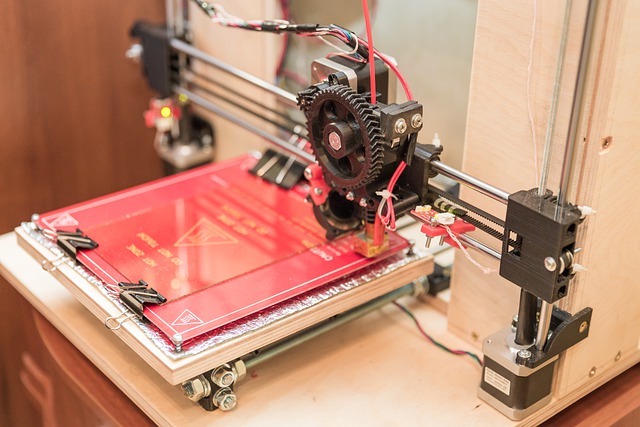
 3D stands for three-dimensional. So, a three-dimensional printer is a machine that can create three-dimensional objects. But how does it do this? Well, most three-dimensional printers work by layering thin sheets of material on top of each other. The material is typically plastic or metal, but some printers can also use other materials, like glass or concrete. The printer starts at the bottom layer and slowly builds up the object layer by layer. One of the most important things to understand about three-dimensional printing is that it is an additive process. This means that the printer adds material to create the object instead of subtractive processes like carving or milling, where the material is removed to create an object.
 There are a variety of materials that can be used in three-dimensional printing, but the most common are plastics and metals. Plastics are the most popular material for three-dimensional printing because they are relatively inexpensive and easy to work with. In addition, there are a variety of plastics that can be used in three-dimensional printing, each with its own unique properties. Metals are another popular choice for three-dimensional printing. They are solid and durable, making them ideal for medical implants or machine parts applications. In addition, metals can be printed with high accuracy, making them perfect for delicate objects.